Knockout Stage Predictions
Predicting the knockout stage of a 48-team World Cup is an exercise in structured uncertainty....

 Available in US
Loading...
Data-driven World Cup 2026 betting tips, odds comparison, and group predictions for NZ punters. All Whites analysis, fixtures in NZT, and value bets.
A colleague once told me that World Cup betting starts with understanding scale. He was right. The 2026 tournament dwarfs every edition that preceded it — not incrementally, but structurally. FIFA's expansion from 32 to 48 teams adds sixteen nations to the draw, creates twelve groups instead of eight, and generates thirty-two additional matches. Those aren't cosmetic changes. They alter the probability distributions that underpin every outright market and group-stage wager.
| Metric | Value | Comparison to 2022 |
|---|---|---|
| Total teams | 48 | +16 (50% increase) |
| Total matches | 104 | +40 (62.5% increase) |
| Host nations | 3 (USA, Mexico, Canada) | +2 |
| Stadiums | 16 | +8 |
| Tournament duration | 39 days (11 June – 19 July) | +10 days |
| Group stage format | 12 groups × 4 teams | Was 8 groups × 4 teams |
| Teams advancing | 32 (top 2 + 8 best 3rd) | Was 16 |
| Knockout rounds | 5 (R32, R16, QF, SF, Final) | +1 round |
The introduction of the Round of 32 fundamentally changes knockout mathematics. In previous tournaments, winning your group meant avoiding fellow group winners until the quarter-finals at earliest. Under the 2026 format, group winners can meet second-placed teams from adjacent groups as early as the Round of 32 — and the eight best third-placed finishers add another layer of unpredictability to bracket projections.
Current Market Leaders — Tournament Winner Odds (April 2026)
Argentina 5.50 | France 6.00 | England 7.50 | Brazil 8.00 | Germany 9.00
These outright prices compress the top five contenders within 3.50 points of each other — the tightest spread at this stage of the cycle since 2006. For context, Argentina opened at 5.00 after lifting the 2022 trophy and have drifted only marginally despite winning the 2024 Copa América. The market prices them as slight favourites without conviction, distributing probability across a deeper pool of genuine challengers than Qatar offered four years ago. What strikes me most is England's position at 7.50, shorter than Brazil despite never winning the tournament and losing the Euro 2024 final. The market seems to be pricing in Jude Bellingham's trajectory more than historical performance, which creates interesting angles for punters willing to fade sentiment.
For NZ-focused analysis, the key structural detail is this: Oceania's guaranteed berth means the All Whites didn't need to navigate an intercontinental playoff. They qualified directly by winning the OFC Nations Cup, making this tournament's path to participation fundamentally different from the playoff heartbreaks of 2014, 2018, and 2022.
⚽ World Cup 2026 Outright Value Analyzer
El mercado de ganador absoluto está en su punto más ajustado desde 2006 – los cinco favoritos están dentro de 3,50 puntos entre sí. Analiza el valor real de cada equipo, incluyendo los All Whites, y encuentra oportunidades de value.
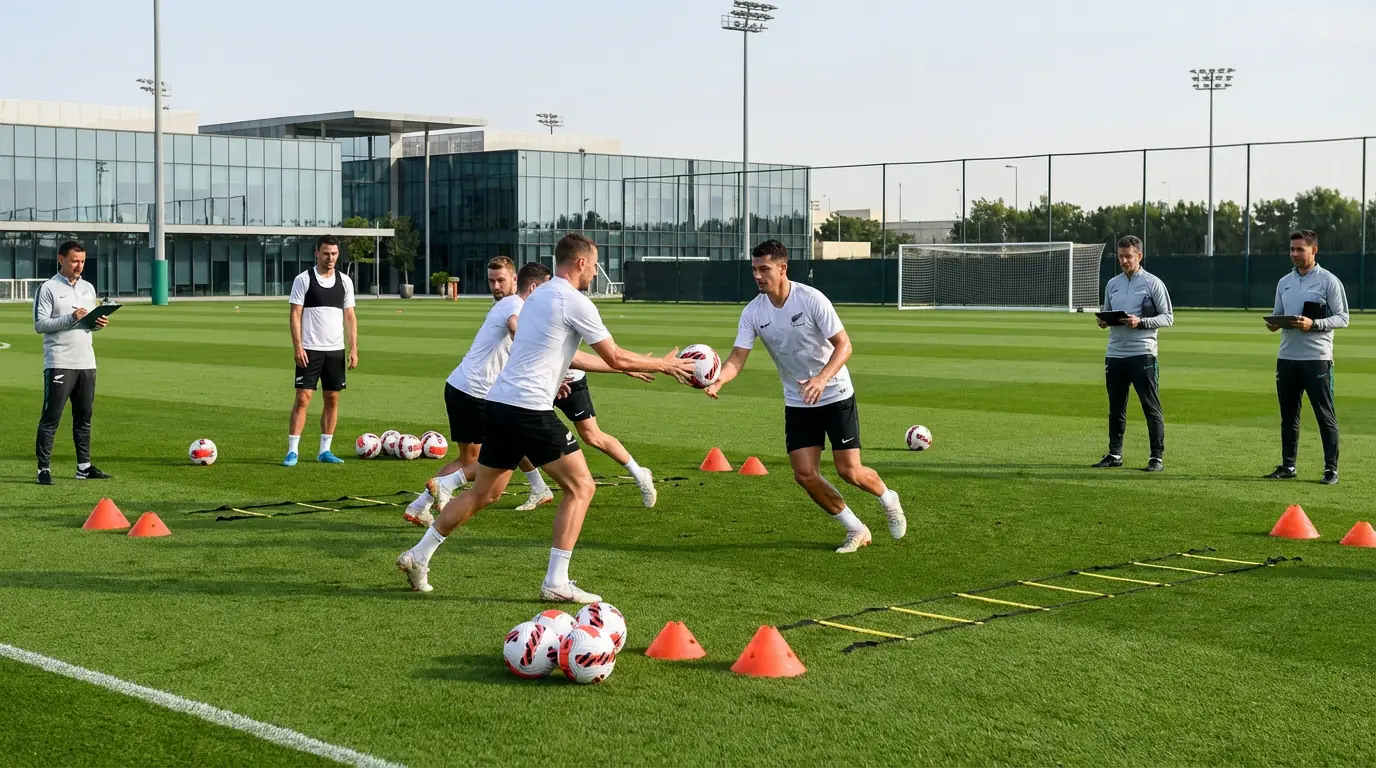
I remember watching Winston Reid's header ripple the Slovakia net in Rustenburg, 2010. New Zealand's 1-1 draw wasn't just a result — it was the opening act of the only unbeaten campaign by any nation at that World Cup. Sixteen years later, the All Whites return to football's biggest stage with a draw that tests them immediately: Belgium's ageing golden generation, Mo Salah's Egypt, and an Iran squad whose participation remains uncertain following geopolitical developments in early 2026. For Kiwi supporters, the path through Group G requires clear-eyed assessment of where New Zealand actually sits within this quartet.
Group G confirmed: Belgium (seeded), Egypt, Iran*, New Zealand. *Iran's participation subject to FIFA confirmation as of April 2026.
Match 1: Iran vs New Zealand
15 June 2026, 21:00 ET | 16 June 2026, 13:00 NZT
SoFi Stadium, Los Angeles
Match 2: New Zealand vs Egypt
21 June 2026, 21:00 ET | 22 June 2026, 13:00 NZT
BC Place, Vancouver
Match 3: New Zealand vs Belgium
26 June 2026, 23:00 ET | 27 June 2026, 15:00 NZT
BC Place, Vancouver
FIFA's scheduling has handed New Zealand a gift: all three group matches fall during afternoon hours in New Zealand. The 17-hour offset from Eastern Time means 21:00 ET kickoffs translate to 13:00 NZT the following day. Compared to the 2010 campaign — where matches kicked off between 02:30 and 06:00 NZT — this schedule allows the entire country to watch without sacrificing sleep or work.
| Position | Team | Projected Points | Qualification Probability |
|---|---|---|---|
| 1st | Belgium | 7 | 89% (auto-qualify) |
| 2nd | Egypt | 5 | 72% (auto-qualify) |
| 3rd | New Zealand | 3 | 38% (best 3rd route) |
| 4th | Iran* | 2 | 12% |
Belgium enter as clear group favourites despite the decline narrative surrounding their golden generation. Kevin De Bruyne remains world-class at 34, and Jérémy Doku has matured into one of Europe's most dangerous wingers. Their depth may concern analysts — goalkeeper Thibaut Courtois has struggled with injuries — but my model gives them an 89% probability of finishing in the top two. Egypt, led by Mohamed Salah likely playing in his final major tournament at 34, profile as comfortable second-place finishers with a 72% likelihood of automatic qualification.
That leaves New Zealand competing for third place against Iran, assuming Iran participates. FIFA president Gianni Infantino stated on 31 March 2026 that "there is no Plan B" regarding Iran's involvement, but the situation remains fluid following the March military strikes. If Iran withdraws or is replaced, Group G becomes a three-team group with adjusted qualification mathematics — potentially improving New Zealand's odds significantly.
New Zealand's realistic ceiling is third place with approximately 3 points (one win, possibly against Iran, or draws against Egypt and Iran). Finishing as one of the eight best third-placed teams across twelve groups would advance them to the Round of 32 — an unprecedented achievement for Oceanian football.
The historical parallel to 2010 deserves scrutiny. That All Whites squad earned three draws — 1-1 against Slovakia, 1-1 against defending champions Italy, 0-0 against Paraguay — finishing third in their group with 3 points. Under the 2026 format, those same results would likely secure passage to the knockout rounds as a best third-placed team. The expanded tournament genuinely rewards competitive third-place finishes in ways the 32-team format never did.
I've built a detailed breakdown of New Zealand's squad composition, key player profiles, and tactical setup on the dedicated All Whites tournament page. For punters specifically interested in the Group G betting markets — including group winner odds, correct score predictions, and qualification probabilities — the Group G analysis covers matchup data and historical head-to-head records in depth.
Group G's composition gives New Zealand a genuinely competitive path to the knockout rounds. But how does the All Whites' challenge compare to the broader tournament picture? The outright winner market tells us where global expectation sits heading into June.
A punter I respect once described World Cup outright markets as "beauty contests judged by accountants." He meant that public sentiment — who looks impressive, who has the stars, who carries momentum — collides with mathematical reality when oddsmakers set their lines. The 2026 market exhibits this tension more clearly than any tournament I've covered. Argentina, the defending champions, sit at 5.50 despite no nation successfully defending the World Cup since Brazil in 1962. Meanwhile, Spain — Euro 2024 winners with the youngest core of any elite squad — trades at 10.00, nearly double Argentina's price. The gap suggests bookmakers are pricing recent history over squad trajectory.
| Rank | Team | Odds | Implied Probability | Key Factor |
|---|---|---|---|---|
| 1 | Argentina | 5.50 | 18.2% | Defending champions; Messi's final tournament |
| 2 | France | 6.00 | 16.7% | 2018 winners, 2022 runners-up; Mbappé peak years |
| 3 | England | 7.50 | 13.3% | Two consecutive Euro finals; Bellingham factor |
| 4 | Brazil | 8.00 | 12.5% | Five-time winners; Vinícius Jr, Rodrygo generation |
| 5 | Germany | 9.00 | 11.1% | Host nation (partial); squad rebuild under Nagelsmann |
| 6 | Spain | 10.00 | 10.0% | Euro 2024 champions; Yamal, Pedri, Gavi core |
| 7 | Portugal | 12.00 | 8.3% | Cristiano Ronaldo's final tournament; deep squad |
| 8 | Netherlands | 15.00 | 6.7% | Strong defensive structure; favourable Group F draw |
| 9 | Belgium | 17.00 | 5.9% | Golden generation's last chance; Group G with NZ |
| 10 | USA | 20.00 | 5.0% | Primary host; home advantage across 11 stadiums |
Several elements stand out from this table. First, the implied probabilities sum to 107.7% — bookmaker margin extracted from backers. Second, the USA at 20.00 represents the most aggressive host-nation pricing since South Korea at the 2002 tournament they co-hosted. American soccer has genuinely improved since the 2022 cycle, with Christian Pulisic, Weston McKennie, and Tyler Adams now established in top European leagues, but 5% implied probability feels optimistic given the squad's international tournament pedigree.
Belgium's position at 17.00 interests me most from a New Zealand perspective. The bookmakers price them as ninth-favourites globally but overwhelming favourites to win Group G. That gap — tournament long-shot, group certainty — creates potential value in qualification-specific markets. If Belgium underperform against Egypt or stumble against Iran (should Iran participate), the Group G winner market will shift dramatically. Punters holding Belgium to win the group at short prices would face unexpected variance.
The last nation to win the World Cup as hosts was France in 1998. Before that, Argentina in 1978. Home advantage delivered two titles in twenty years, then none in the next twenty-eight. The USA enters as the first primary host since Russia (2018, eliminated in quarter-finals) and Brazil (2014, eliminated in semi-finals to Germany 7-1).
For deeper analysis of where value exists within these markets — including mid-tier teams underpriced relative to their probability models — I've compiled a dedicated World Cup 2026 winner odds breakdown. That page tracks line movements from major sportsbooks and identifies divergences between market pricing and statistical projections.
Twelve groups. Forty-eight teams. The largest World Cup draw in history created some fascinating clusters — and a few merciful draws that should have fancied nations breathing easier. What follows is my assessment of each group, focusing on the competitive dynamic and most likely qualification outcomes. I've kept these capsules tight; the dedicated groups hub provides full fixture schedules and probability matrices.
Mexico hosts the tournament opener at Estadio Azteca on 11 June against South Africa — a fixture carrying enormous symbolic weight. El Tri benefits from home support across three Mexican venues and enters as clear group favourites at 1.65 to top the group. South Korea, with Son Heung-min likely playing in his final World Cup at 33, profiles as comfortable second-place qualifiers. South Africa and Czechia contest third place, with South Africa's AFCON performances suggesting they're capable of a surprise if either favourite slips.
Canada gets home matches at BMO Field in Toronto and enters the tournament after consistently developing their program through the 2022 cycle and beyond. Alphonso Davies remains the squad's attacking catalyst. Switzerland's experienced tournament campaigners — Granit Xhaka, Manuel Akanji — give them slight edge for second place, though Bosnia carry enough quality through midfield to make this group genuinely unpredictable. Qatar, the 2022 hosts, struggled badly on home soil and haven't demonstrably improved since.
Brazil's path to the knockout rounds appears straightforward. Five-time champions meet Morocco — the 2022 semi-finalists who announced African football's arrival at the elite level — in what should be the group's decisive match. Scotland enter their first World Cup since 1998, carrying desperate hope and limited expectation after decades of playoff heartbreak. Haiti qualify for their first World Cup since 1974, a 52-year gap that speaks to CONCACAF's competitive evolution. Brazil and Morocco should advance comfortably, with the battle for first place the primary narrative.
The primary hosts land in a group with genuine knockout implications. USA face Australia and Turkey — both capable of causing problems — alongside Paraguay, who qualified through South America's brutally competitive CONMEBOL process. For Kiwi viewers, Australia's placement here creates natural trans-Tasman interest. The Socceroos face significantly harder group opposition than the All Whites, with USA's home advantage and Turkey's aggressive pressing style both posing difficulties. I give Australia approximately 45% probability of reaching the Round of 32, lower than New Zealand's path through Group G.
Germany, hosting matches at their own stadiums despite the tournament centring on North America, carry the partial-host advantage into Group E. Julian Nagelsmann's squad rebuild has produced encouraging results through qualifying. Côte d'Ivoire won the 2024 Africa Cup of Nations on home soil and possess genuine star power through midfielders Franck Kessié and Seko Fofana. Ecuador return after 2022's surprising group-stage competitiveness. Curaçao represent the tournament's Cinderella story — a Caribbean island of 150,000 people appearing at their first World Cup.
Netherlands draw what looks like manageable opposition on paper, but Japan have made a habit of embarrassing European heavyweights. The Blue Samurai beat Germany and Spain in the 2022 group stage before falling to Croatia on penalties. Their squad now features players established at Bayern Munich, Liverpool, and Brighton — a talent concentration that suggests progression rather than regression. Sweden's golden generation has aged out; this Swedish squad profiles as transitional. Tunisia lack the firepower to threaten either favourite but could prove awkward opponents for whichever team faces them with qualification already secured.
Covered in depth above. Belgium and Egypt are clear favourites for automatic qualification, with New Zealand's best path running through third place and the eight-team best-of-bracket. Iran's participation remains unconfirmed as of this writing. The group's matches take place exclusively on North America's West Coast — Los Angeles, Seattle, and Vancouver — creating favourable viewing times for Oceania audiences. This group carries the most uncertainty of any in the tournament due to the Iran situation.
Spain's Euro 2024 triumph made them many analysts' dark horse to win the whole tournament. Their core — Lamine Yamal (still only 18), Pedri, Gavi, Nico Williams — combines technical excellence with genuine speed. Uruguay bring their characteristic competitiveness; this is a squad that never underperforms at World Cups relative to expectation. Saudi Arabia's stunning 2-1 win over Argentina in 2022's group stage proved that on any given day, they can produce results. Cape Verde debut at the tournament as one of the smallest nations ever to qualify.
France head into the tournament as second-favourites behind Argentina. Kylian Mbappé enters peak years, the midfield has regenerated around Aurélien Tchouaméni and Eduardo Camavinga, and Didier Deschamps' tournament record speaks for itself — 2018 champions, 2022 runners-up. Senegal, 2022 AFCON winners, return without the injured Sadio Mané but retain enough quality to challenge for second place. Iraq qualify for their first World Cup since 1986, while Norway — featuring Erling Haaland — carry enormous expectation despite their relative inexperience at major tournaments.
Defending champions Argentina draw a group they should dominate. Lionel Messi confirmed he will participate in what will almost certainly be his final World Cup at age 38 — his contract with Inter Miami permits tournament participation. Algeria, led by players from major European leagues, offer the most likely upset threat. Austria's pressing style under Ralf Rangnick has produced results against better-resourced opponents. Jordan qualify for their first-ever World Cup, a remarkable achievement for West Asian football.
Cristiano Ronaldo's farewell World Cup sees Portugal drawn into Group K alongside a dangerous Colombian squad. Colombia qualified impressively through South America, featuring Luis Díaz and a midfield of genuine creativity. Portugal's squad depth — Bruno Fernandes, Bernardo Silva, Rafael Leão — makes them clear favourites, but Colombia should push them in the match deciding first place. DR Congo and Uzbekistan both qualified through competitive confederations but face significant quality gaps against the group's top two.
This group carries "Group of Death" credentials. England and Croatia have unfinished business from 2018's semi-final, and both squads retain enough quality to challenge for the tournament. England's attacking options — Bellingham, Saka, Foden, Kane — create matchup nightmares for any defence. Croatia's midfield, despite Luka Modrić turning 40 during the tournament, maintains the control-football philosophy that took them to the 2018 final and 2022 semi-finals. Ghana return after 2022's group stage, while Panama feature in their second World Cup. The England-Croatia match will likely determine who tops the group and avoids a potentially dangerous Round of 32 opponent.
The 2010 World Cup taught me that alarm clocks and football don't mix. New Zealand's matches kicked off between 02:30 and 06:00 NZT — times that demanded either dedication or delirium. The 2026 edition offers something revolutionary for Kiwi viewers: matches that fall during actual waking hours. FIFA's scheduling across three North American time zones creates a tournament where prime evening matches in the Americas translate to afternoon viewing in New Zealand. The 17-hour offset from Eastern Time works in our favour for the first time since I started covering international football.
| Match | ET Time | NZT Time | Venue |
|---|---|---|---|
| Opening Match: Mexico vs South Africa | 11 June, 20:00 | 12 June, 12:00 | Estadio Azteca, Mexico City |
| NZ Match 1: Iran vs New Zealand | 15 June, 21:00 | 16 June, 13:00 | SoFi Stadium, Los Angeles |
| NZ Match 2: New Zealand vs Egypt | 21 June, 21:00 | 22 June, 13:00 | BC Place, Vancouver |
| NZ Match 3: New Zealand vs Belgium | 26 June, 23:00 | 27 June, 15:00 | BC Place, Vancouver |
| Round of 32 begins | 28 June | 29 June onwards | Various |
| Quarter-finals | 4-5 July | 5-6 July | Various |
| Semi-finals | 8-9 July | 9-10 July | Various |
| Final: MetLife Stadium | 19 July, 15:00 | 20 July, 07:00 | East Rutherford, NJ |
Note that New Zealand Standard Time (NZST/UTC+12) applies throughout the tournament. The World Cup runs during the Southern Hemisphere winter, so daylight saving doesn't complicate conversions. June and July in New Zealand mean standard time — add 17 hours to Eastern Time, 14 hours to Pacific Time, and 20 hours to Central Time (Mexico) for any match you're tracking.
Best viewing windows for NZ: West Coast USA matches (Los Angeles, San Francisco, Seattle) kick off between 18:00-23:00 ET, translating to 10:00-15:00 NZT the following day. East Coast matches (New York, Miami, Boston) often kick off later local time, pushing NZT starts into late afternoon or early evening.
The final kicks off at 15:00 ET on 19 July, which becomes 07:00 NZT on 20 July — an early morning start, but far more civilised than the 05:00 final kickoffs that plagued European-hosted tournaments. The complete fixture list with all 104 matches converted to New Zealand time is available in the dedicated kick-off times resource, which includes calendar export functionality.
One scheduling quirk worth noting: all three of New Zealand's matches take place on North America's West Coast — Los Angeles for Match 1, Vancouver for Matches 2 and 3. This wasn't coincidental. FIFA's venue allocation considered broadcast audiences, and Oceania's time zones made Pacific venues the logical choice for the region's representative. The result is every All Whites match falling between 13:00 and 15:00 NZT — peak afternoon viewing without requiring leave from work or school.
The question I'm asked most frequently isn't about odds or predictions — it's about legality. Can Kiwis actually bet on the World Cup? The short answer is yes, through one provider. The longer answer involves legislation that fundamentally changed New Zealand's sports betting landscape in mid-2025.
Legal status: TAB NZ holds an exclusive monopoly on sports betting in New Zealand under the Racing Industry Act 2020 (amended June 2025). No other operator may legally accept sports wagers from persons located in New Zealand. The Online Casino Gambling Act, which came into force on 1 May 2026, applies to casino products only — sports betting remains TAB NZ's exclusive domain.
The regulatory framework sits under the Gambling Act 2003, administered by the Department of Internal Affairs. For punters, the practical implications are straightforward: TAB NZ is your legal option for World Cup betting. The platform offers decimal odds (the New Zealand and Australian standard), NZD transactions, and market coverage spanning match results, group winners, tournament outrights, and player props including Golden Boot markets.
TAB NZ's World Cup coverage includes the core markets most punters seek. Match result (1X2) betting lets you back home win, draw, or away win at stated decimal odds. Over/under goals markets set a line — typically 2.5 goals — where you wager whether the combined score exceeds or falls short. Asian handicap markets apply goal advantages to even out mismatches between teams of different quality, creating more balanced odds. Outright markets cover tournament winner, group winners, top scorer (Golden Boot), and reach-the-final propositions.
For those new to decimal odds — the format TAB NZ uses by default — the calculation is simple: stake multiplied by odds equals total return. A NZ$50 wager on Argentina at 5.50 returns NZ$275 (NZ$50 × 5.50) if Argentina win the tournament. Your profit is the return minus your original stake: NZ$275 – NZ$50 = NZ$225 profit. Fractional odds, used primarily in the UK, express the same information differently; 5.50 decimal equals 9/2 fractional.
If you're wondering why you won't see gambling advertisements blanketing World Cup coverage, the answer lies in New Zealand's strict promotional regulations. The Racing Industry Act prohibits advertisements directed at minors, broadcast advertising between 06:00 and 21:30, celebrity or influencer endorsements, and outdoor advertising within 300 metres of schools or childcare facilities. Licensed operators — currently just TAB NZ for sports betting — face a maximum of five 30-second advertisements per platform per 24 hours. These rules took full effect alongside the 2026 legislative changes, meaning World Cup coverage will look noticeably different from jurisdictions where gambling advertising saturates sports broadcasts.
Key point for NZ punters: winnings from gambling are not taxable income in New Zealand. Unlike Australia, the UK, or the USA, the New Zealand tax system treats gambling as entertainment rather than income-generating activity. Profits from successful World Cup wagers are yours to keep in full.
The complete World Cup 2026 betting guide covers market types in depth — including worked examples of Asian handicaps, multi (parlay) construction, and bankroll management strategies. That resource suits punters looking to understand the full range of available wagers rather than just the headline markets.
Understanding where to bet is the first step. Understanding where the matches happen shapes how you watch them — and for tournament atmosphere, the sixteen host stadiums offer distinct characters worth knowing.
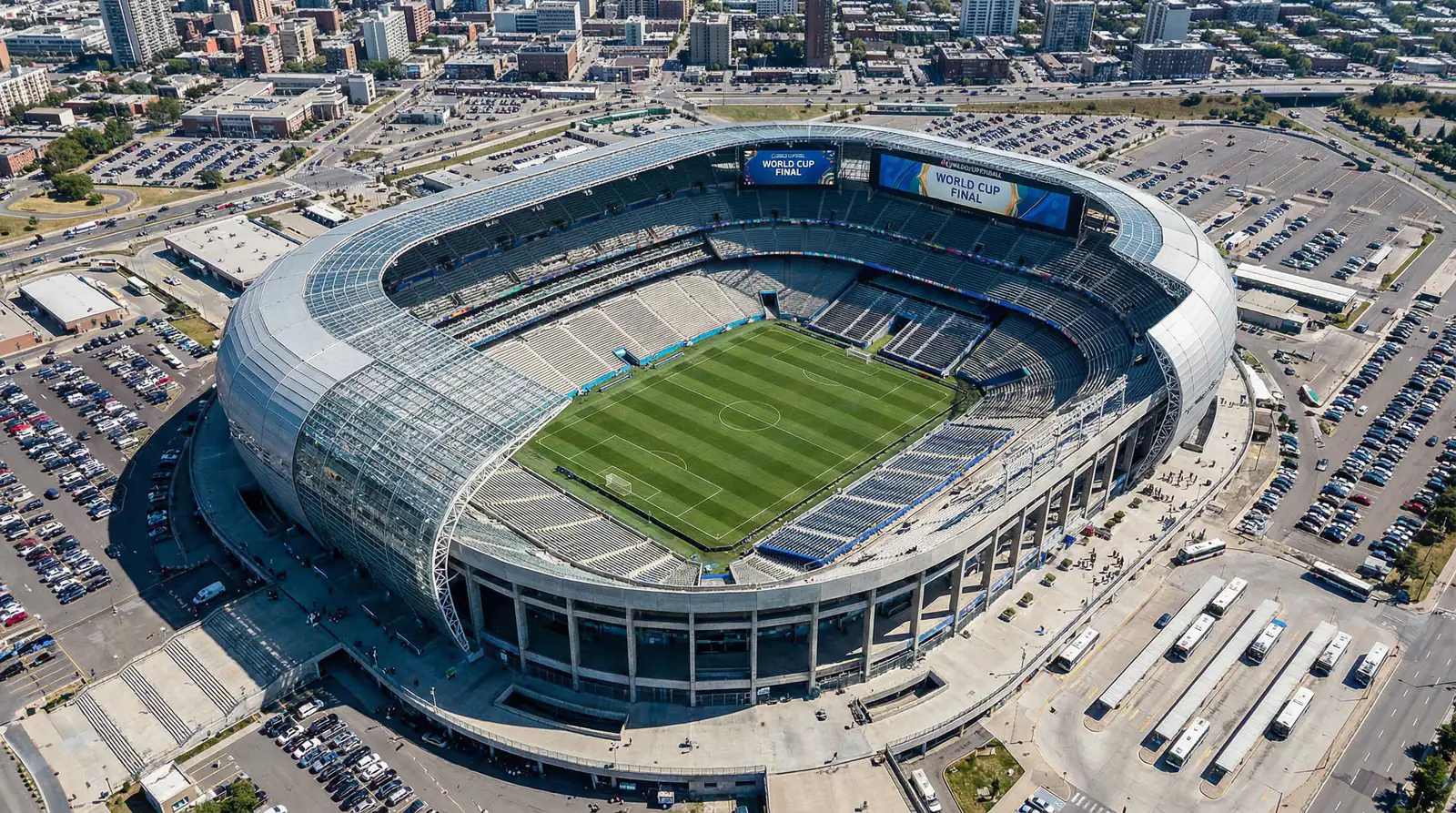
I've covered World Cups in South Africa, Brazil, Russia, and Qatar. Each tournament carries the flavour of its host — and 2026 will taste like American scale. The sixteen stadiums include the largest venues ever used for a World Cup final tournament, with MetLife Stadium's 82,500 capacity anchoring the bracket as the final destination. For New Zealand supporters tracking the All Whites, two venues matter most: SoFi Stadium in Los Angeles and BC Place in Vancouver.
| Stadium | City | Capacity | Notable |
|---|---|---|---|
| MetLife Stadium | East Rutherford, NJ | 82,500 | Final (19 July) |
| SoFi Stadium | Los Angeles, CA | 70,000 | NZ Match 1 |
| AT&T Stadium | Dallas, TX | 80,000 | Semi-final venue |
| Hard Rock Stadium | Miami, FL | 65,000 | Semi-final venue |
| NRG Stadium | Houston, TX | 72,000 | Quarter-final venue |
| Mercedes-Benz Stadium | Atlanta, GA | 71,000 | Quarter-final venue |
| Lumen Field | Seattle, WA | 69,000 | Group G matches |
| Levi's Stadium | Santa Clara, CA | 68,500 | — |
| Lincoln Financial Field | Philadelphia, PA | 69,000 | — |
| Gillette Stadium | Foxborough, MA | 65,000 | — |
| GEHA Field at Arrowhead | Kansas City, MO | 76,000 | — |
| Stadium | City | Capacity | Notable |
|---|---|---|---|
| Estadio Azteca | Mexico City | 87,000 | Opening Match (11 June); third World Cup hosting |
| Estadio BBVA | Monterrey | 53,000 | — |
| Estadio Akron | Guadalajara | 49,000 | — |
| Stadium | City | Capacity | Notable |
|---|---|---|---|
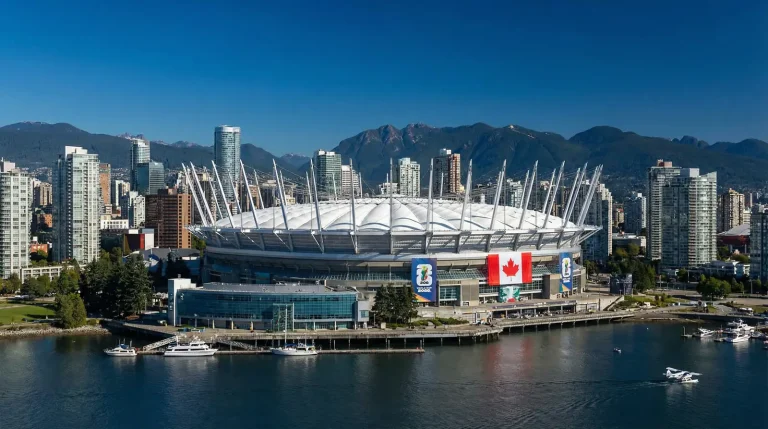
| BC Place | Vancouver | 54,000 | NZ Matches 2 and 3 |
| BMO Field | Toronto | 45,000 | — |
Estadio Azteca becomes the first stadium to host three World Cups, having previously staged the 1970 and 1986 tournaments — including Maradona's infamous "Hand of God" goal against England. For New Zealand supporters, BC Place in Vancouver offers particularly accessible travel. The city hosts a significant Kiwi diaspora, flight connections through Auckland operate regularly, and the Pacific time zone minimises jet lag compared to East Coast venues.
Detailed venue breakdowns for each stadium hosting All Whites matches are available in the stadium guides section. These pages include capacity figures, pitch specifications, and transport information for travelling supporters.
Tournament betting markets don't sit still. Injuries reshape squad projections. Manager changes alter tactical expectations. Geopolitical developments — as the Iran situation demonstrates — can redraw group dynamics entirely. This section tracks the developments I consider most significant for punters tracking World Cup 2026 odds and fixtures.
31 March 2026 — Iran participation update: FIFA President Gianni Infantino confirmed that the organisation has "no Plan B" regarding Iran's participation in Group G. The statement followed Iran's sports minister suggesting the national team may withdraw due to circumstances following the March 2026 military strikes. Group G opponents Belgium, Egypt, and New Zealand await clarification. If Iran does not participate, FIFA must decide whether to proceed with a three-team group or introduce a replacement nation. Italy, Iraq, and UAE have been mentioned as potential replacements in media speculation, though FIFA has not confirmed any contingency planning.
24 March 2026 — Final draw completed: All 48 teams now know their opponents. The draw placed New Zealand in Group G alongside Belgium, Egypt, and Iran. Group seedings followed FIFA rankings, with Belgium as the seeded team. New Zealand's placement avoided the tournament favourites (Argentina, France, England, Brazil) at the group stage.
Ongoing — Odds movement tracking: Argentina have drifted from 5.00 to 5.50 since the draw, with France shortening from 6.50 to 6.00 over the same period. England remain stable at 7.50. Market movement updates appear in the dedicated odds analysis pages as significant shifts occur.
New Zealand uses decimal odds as the standard format, the same system used in Australia and most of Europe. Decimal odds show your total return per dollar wagered — a price of 5.50 means a NZ$10 bet returns NZ$55 (stake plus profit). TAB NZ displays all markets in decimal format by default. If you're familiar with UK fractional odds (like 9/2) or American moneyline odds (+450), decimal format expresses the same probability differently: multiply your stake by the decimal to calculate total return.
Yes, through TAB NZ. The Racing Industry Act 2020 grants TAB NZ exclusive rights to offer sports betting to persons located in New Zealand. No offshore operator holds a legal licence to accept sports wagers from NZ residents. The Department of Internal Affairs regulates gambling under the Gambling Act 2003, and penalties for unlicensed operators accepting NZ bets increased significantly under the May 2026 legislative changes. For World Cup betting specifically, TAB NZ offers match markets, outright winner odds, top scorer markets, and group-stage propositions.
New Zealand are drawn in Group G alongside Belgium, Egypt, and Iran. The All Whites play Iran first (16 June, 13:00 NZT at SoFi Stadium, Los Angeles), then Egypt (22 June, 13:00 NZT at BC Place, Vancouver), and finally Belgium (27 June, 15:00 NZT at BC Place, Vancouver). Iran's participation remains subject to FIFA confirmation following geopolitical developments in early 2026. Belgium enter as heavy group favourites, with Egypt expected to claim second place. New Zealand's most realistic path to the Round of 32 involves finishing third and qualifying as one of the eight best third-placed teams across twelve groups.
Match times vary based on the host city's time zone, but most premium fixtures fall between 09:00 and 17:00 NZT. New Zealand Standard Time (UTC+12) sits 17 hours ahead of US Eastern Time, meaning a 21:00 ET kickoff becomes 13:00 NZT the following day. All three All Whites group matches fall between 13:00 and 15:00 NZT — convenient afternoon viewing. The final on 19 July kicks off at 15:00 ET, which translates to 07:00 NZT on 20 July. West Coast USA venues (Los Angeles, Seattle, San Francisco) produce the most NZ-friendly kickoff times.
No. New Zealand does not tax gambling winnings. The Inland Revenue Department treats gambling as entertainment rather than income-generating activity, meaning profits from successful World Cup bets are not subject to income tax. This differs from jurisdictions like the United States (where gambling winnings are taxable) and makes New Zealand one of the more favourable environments for recreational punters. The tax-free status applies regardless of amount won.
The expanded format creates twelve groups instead of eight, with 32 teams advancing to the knockout rounds (top two from each group plus eight best third-placed teams). This fundamentally changes group-stage probability mathematics. Third-place finishes now carry value — approximately half of all third-placed teams will advance. The additional Round of 32 means more knockout matches before the quarter-finals, extending bracket predictions and creating more elimination opportunities. For punters, the key implication is that backing underdogs to qualify becomes more viable than under the previous 32-team format.
TAB NZ covers all major World Cup betting markets: match result (1X2), Asian handicap, over/under goals, both teams to score, correct score, half-time/full-time result, and first goalscorer. Tournament-level markets include outright winner, top scorer (Golden Boot), group winners, team to reach the final, and various specials such as highest-scoring group or total tournament goals. Live in-play betting is available during matches, allowing wagers on next goal, match outcome, and specific game events as action unfolds.
R18 — Gambling is for adults only. This content is intended for persons aged 18 years and older. Gambling carries risk. Only bet what you can afford to lose, and never chase losses. If you or someone you know experiences difficulty controlling gambling behaviour, free and confidential support is available through the New Zealand Gambling Helpline: 0800 654 655. The helpline operates 24 hours a day, seven days a week.
TAB NZ offers responsible gambling tools including deposit limits, time limits, and self-exclusion options. The information on this site is intended for educational and entertainment purposes. Odds and market availability are subject to change. Always confirm current prices with your betting provider before placing any wager. Past performance does not guarantee future results.