
Belgium at World Cup 2026: Squad, Odds & Predictions — KICKOFF26
 Available in US
Loading...
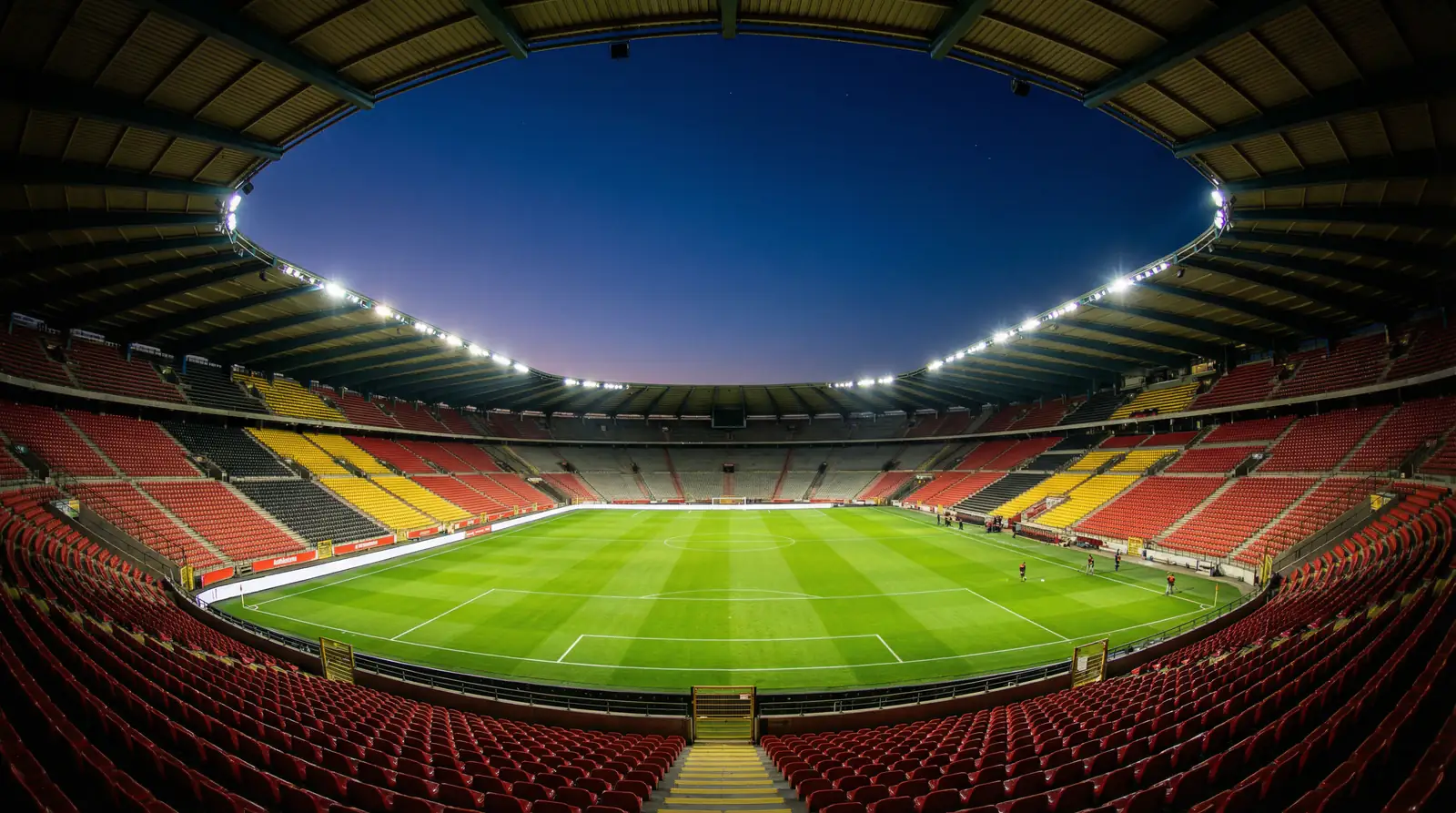
Third place at the 2018 World Cup. Quarter-finals at Euro 2020. Group stage exit at the 2022 World Cup. The trajectory tells a story that Belgian football does not want to acknowledge: the golden generation is rusting. Kevin De Bruyne turned 35 in June 2026. Romelu Lukaku carries the weight of expectation and the burden of inconsistency in equal measure. The window for this collection of extraordinary talent to win a major trophy has narrowed to something approaching closure.
And yet. Belgium enters the 2026 World Cup ranked 4th in the world, priced at 12.00 to lift the trophy, and installed as overwhelming favourites to win Group G. The betting markets still believe. The FIFA coefficient still validates. The squad depth still impresses on paper. For New Zealand punters analysing their own team’s group opponents, Belgium represents the mountain that must be climbed — or more accurately, the mountain that must be survived while focusing energy on more achievable objectives.
Belgium’s World Cup Pedigree: The Data Behind Expectations
Bronze medals look impressive in trophy cabinets. They also represent the clearest symbol of falling short. Belgium’s third-place finish at the 2018 World Cup in Russia remains the high-water mark for this generation — higher than anything achieved by their predecessors, yet somehow inadequate given the talent available. I watched that semifinal against France in real time, convinced Belgium would find an equaliser. They never did. The pattern repeated at Euro 2020, when Italy eliminated Belgium in the quarter-finals with a performance that exposed defensive vulnerabilities the Red Devils have never fully resolved.
The 2022 World Cup disaster magnified concerns about the golden generation’s competitive mortality. Belgium lost to Morocco, drew with Croatia, and beat only Canada in a group stage exit that stunned observers who had placed them among the favourites. The underlying data from that tournament painted an even bleaker picture: Belgium created just 4.8 expected goals across three matches while allowing 4.1 — underlying numbers that suggested parity with opponents they should have dominated.
| Metric | Data |
|---|---|
| FIFA Ranking | 4th |
| World Cup Appearances | 14 (including 2026) |
| Best World Cup Finish | 3rd (2018) |
| World Cup Record (All-Time) | P47 W22 D9 L16 GF79 GA71 |
| Head Coach | Domenico Tedesco |
| Captain | Kevin De Bruyne |
| Group G Odds (to win) | 1.30 |
| Tournament Winner Odds | 12.00 |
The historical record across 14 World Cup appearances includes a semifinal run in 1986 when Enzo Scifo orchestrated Belgium’s attack against Diego Maradona’s Argentina. That defeat — 2-0 to eventual champions — established Belgium as a nation capable of producing world-class tournaments without quite reaching the final step. The pattern has persisted for four decades. Talent, execution, near-misses, and ultimate disappointment. The 2026 edition carries the weight of this history alongside the urgency of an aging squad approaching its final collective opportunity.
Qualification Campaign: UEFA Path to North America
European qualification for the 2026 World Cup operated through the familiar group stage format, and Belgium navigated their section with characteristic efficiency. Domenico Tedesco’s squad finished atop Group F, winning seven of eight matches with a solitary draw against Austria providing the only blemish. The goal differential of +22 (24 scored, 2 conceded) demonstrated the chasm between Belgium and regional opponents like Estonia, Sweden, and Azerbaijan.
Tedesco’s appointment following the 2022 debacle represented a generational shift in Belgian football philosophy. The German coach, previously successful at clubs including RB Leipzig and Schalke, brought tactical flexibility that Roberto Martínez’s approach had lacked. The 4-2-3-1 formation that defined the Martínez era gave way to multiple systems: 3-4-3 against weaker opponents, 4-3-3 in competitive fixtures, and occasional asymmetrical shapes designed to maximise De Bruyne’s creative freedom. This tactical variability could prove significant against diverse World Cup opponents.
The qualification campaign revealed both Belgium’s strengths and their persistent vulnerabilities. Attacking potency remained extraordinary — Romelu Lukaku scored seven goals, while Jérémy Doku and Leandro Trossard combined for eight. Defensive solidity improved under Tedesco’s guidance, with Belgium conceding just twice across eight qualification matches. However, those matches offered limited evidence about performance against elite opposition. Austria provided the sternest test, and Belgium required De Bruyne brilliance to salvage a point from that encounter.
The transition period following 2022 involved difficult conversations about squad composition. Tedesco trusted young players like Johan Bakayoko and Arthur Vermeeren while gradually reducing reliance on veterans whose decline had become evident. This rejuvenation process remains incomplete in 2026 — the core remains substantially similar to 2022 — but Belgium’s squad now includes genuine alternatives rather than ageing backups. The depth chart suggests a team capable of rotating without significant quality degradation, an advantage that proves decisive in tournament football’s condensed scheduling.
Squad Analysis: De Bruyne and the Supporting Cast
The question every analyst must confront: how much does Kevin De Bruyne have left? At 35, playing for Manchester City in a demanding Premier League campaign before shifting to World Cup duty, the greatest midfielder of his generation operates under physical constraints that did not exist during Belgium’s 2018 peak. His 2024-25 club season included multiple injury absences and careful load management — warning signs that tournament football’s intensity could expose.
When healthy and engaged, De Bruyne remains transformative. His passing range — particularly the diagonal switches and through balls that define his creative repertoire — creates advantages that opponents cannot replicate through tactical organisation. In Belgium’s qualification campaign, De Bruyne averaged 2.4 key passes per 90 minutes despite playing deeper than his club role requires. The numbers indicate elite-level playmaking capabilities even as athletic decline encroaches. For New Zealand’s midfielders, the assignment is clear: occupy the spaces De Bruyne wants to receive the ball, and pray that accumulating fatigue limits his influence.
Jérémy Doku has evolved into Belgium’s most dangerous individual talent over the past two seasons. The Manchester City winger’s ability to beat defenders one-versus-one — he completed 7.2 successful dribbles per 90 in the 2024-25 Premier League, ranking among the world’s top five in that metric — creates chaos that organised defences cannot contain through conventional marking. Doku’s end product has improved under Pep Guardiola’s guidance, adding efficient final balls to explosive pace and dribbling ability that existed since his Rennes breakthrough.
Romelu Lukaku carries complicated baggage into every tournament discussion. The striker’s international record — 85 goals in 117 appearances for Belgium — is extraordinary by any historical standard. His club career trajectory has involved disappointing spells at Chelsea and Roma punctuated by genuine excellence at Inter Milan. The version of Lukaku that appears in 2026 will determine Belgium’s attacking ceiling. When confident and supported by creative midfielders, Lukaku provides hold-up play, aerial threat, and finishing instincts that complement De Bruyne’s supply. When isolated or struggling psychologically, he becomes a symbol of Belgium’s broader frustrations.
Leandro Trossard offers tactical flexibility from wide positions. The Arsenal attacker’s ability to play either flank or centrally provides Tedesco with options that Martínez never possessed. Trossard’s workrate — defensive contribution combined with attacking output — makes him valuable in tournament football where squad rotation and tactical adjustment become necessary across multiple matches. His qualification campaign included five assists alongside three goals, numbers that reflect an all-around contribution rather than specialist excellence.
Defensively, Belgium’s options have improved without achieving elite status. Jan Vertonghen’s international career concluded after 2022, and Toby Alderweireld’s influence has diminished with age. The central defensive partnership likely involves Wout Faes and Zeno Debast — competent Premier League and LaLiga players respectively, but not defenders who inspire confidence against the world’s best strikers. Goalkeeper Koen Casteels, who moved from Wolfsburg to Manchester United’s backup role, provides experience and steady performances without the match-winning capability of truly elite shot-stoppers.
Arthur Vermeeren represents Belgium’s future in defensive midfield. The Atlético Madrid youngster, still just 20 in 2026, brings ball-carrying ability and tactical intelligence that Axel Witsel’s declining mobility cannot match. Tedesco has integrated Vermeeren gradually, protecting him from excessive responsibility while building tournament experience. By the World Cup knockout stages, Vermeeren may have established himself as Belgium’s midfield anchor — a transition that would signal genuine squad evolution rather than mere dependence on fading veterans.
Group G: Belgium’s Path to the Knockout Stage
The group draw handed Belgium precisely the scenario their preparations assumed. Egypt, Iran, and New Zealand represent three distinct challenges, none of which should prevent Belgium from topping the group if performances meet reasonable expectations. The markets agree: Belgium’s 1.30 odds to win Group G imply 77% probability, leaving 23% distributed among three opponents who each present specific rather than systemic threats. The complete Group G analysis covers every matchup and qualification scenario.
The opening match against Egypt in Seattle on 15 June features the group’s most compelling individual matchup: De Bruyne’s creative excellence against Mohamed Salah’s counter-attacking menace. Egypt will prioritise defensive organisation before transitioning rapidly when possession is won — a template that troubled Belgium at the 2022 World Cup against Morocco. The Egyptian odds of 5.00 to win that match indicate genuine upset potential, though Belgium’s quality should prevail if focus remains consistent.
The second match against Iran (assuming participation proceeds) at SoFi Stadium in Los Angeles on 21 June presents political complexity alongside sporting examination. Iran’s counter-attacking capabilities and compact defensive structure caused problems for England at the 2022 World Cup before capitulation. Belgium will expect control of this fixture, with markets pricing Iranian victory at 13.00. The greater risk involves complacency rather than opponent quality.
Closing the group stage against New Zealand at BC Place in Vancouver on 26 June should represent Belgium’s most comfortable fixture. The All Whites lack the individual quality to threaten Belgium’s defence consistently, and the gulf in squad depth ensures that Belgian rotation will not significantly diminish competitive advantage. This match offers Tedesco opportunity to rest key players before knockout rounds — assuming the group’s qualification permutations permit such luxury.
The fixture sequence favours Belgium’s tournament rhythm. Opening against the strongest opponent (Egypt) establishes whether this squad has resolved the focus issues that plagued 2022. The middle match against Iran provides consolidation opportunity. The closing fixture against New Zealand allows preparation calibration before elimination rounds begin. Tedesco has the squad depth to rotate across these three matches while maintaining competitive quality — an advantage that Egypt, Iran, and New Zealand cannot replicate.
Belgium Odds: Tournament and Group Markets
The betting markets reveal persistent faith in Belgian potential alongside acknowledgment of mounting uncertainty. Tournament winner odds of 12.00 place Belgium among the second tier of favourites — behind Argentina (5.00), France (6.50), and England (8.00), but alongside Germany and ahead of nations like the Netherlands and Portugal. This positioning reflects Belgium’s ranking and historical tournament performances rather than confident assessment of their current competitive trajectory.
I approach Belgian odds with characteristic scepticism developed through years of watching golden generation tournaments conclude without silverware. The 2022 group stage exit should have prompted market adjustment, yet Belgium remains priced as a genuine contender. The reasoning involves residual respect for individual quality combined with hope that Tedesco’s tactical interventions have resolved structural deficiencies. Whether that hope is justified will only become apparent when tournament football begins.
| Market | Belgium Odds | Implied Probability |
|---|---|---|
| Tournament Winner | 12.00 | 8.3% |
| Reach Final | 6.50 | 15.4% |
| Reach Semifinals | 3.50 | 28.6% |
| Win Group G | 1.30 | 76.9% |
| Top Scorer: Lukaku | 21.00 | 4.8% |
The group winner odds at 1.30 provide minimal value given the certainty they imply. Belgium should win Group G. The question is whether punters want to tie up capital at that price when the same funds could be deployed on more attractive propositions elsewhere. For New Zealand-focused analysis, Belgium’s group dominance probability suggests that All Whites advancement requires results against Egypt and Iran rather than hoping for Belgian collapse.
The reaching semifinals market at 3.50 offers more interesting risk-reward dynamics. This price implies that Belgium navigates Group G and wins one knockout match — a reasonable expectation given likely Round of 32 opposition. Value hunters might find Belgium’s semifinal odds attractive relative to their actual competitive capability, though the 2022 precedent urges caution about assuming knockout stage progression.
Romelu Lukaku’s top scorer odds at 21.00 reflect both his goalscoring record and uncertainty about his 2026 form. The Golden Boot typically requires six or seven goals across the tournament, demanding consistent starts and favourable fixture sequencing through knockout rounds. Lukaku’s qualification record (seven goals in eight matches) demonstrates the capability, but tournament football’s concentrated pressure has historically limited his output compared to regular competitive fixtures.
Tactical Profile and Formation Data
Domenico Tedesco inherited a squad conditioned to Roberto Martínez’s 3-4-3 system and gradually introduced positional flexibility that the predecessor’s approach lacked. Belgium under Tedesco can deploy multiple formations without substantial tactical compromise — a capability that proved decisive in qualification and should provide advantages when facing diverse World Cup opponents.
The primary system involves a 4-3-3 with De Bruyne operating as the right-sided interior midfielder in possession phases. This positioning allows him to drift into central areas when Belgium builds attacks while providing passing angles that a traditional number 10 position would not access. Doku operates as the inverted left winger, cutting inside to shoot or combine with Lukaku. Trossard provides width from the right while offering defensive contribution that pure attackers cannot match.
Against teams that sit deep, Tedesco shifts to 3-2-4-1 in attacking phases — pushing fullbacks into wide midfield positions while maintaining defensive security through the central trio. This shape creates numerical superiority in wide areas, facilitating crossing opportunities for Lukaku’s aerial ability. New Zealand’s likely defensive approach will trigger this tactical adjustment, though the All Whites’ defensive discipline may limit its effectiveness if organisation remains tight for 90 minutes.
Defensive transitions represent Belgium’s most significant vulnerability. The 2022 Morocco defeat exposed how Belgian pressing can become disorganised when opponents break through the first line. Tedesco has prioritised collective pressing triggers — moments when the entire team commits to ball recovery rather than individual efforts — but implementation remains inconsistent. Quick counter-attacks that bypass De Bruyne’s defensive contribution create 3-versus-3 or 4-versus-4 situations where Belgian defenders must make decisions they prefer to avoid.
Set pieces provide Belgium with alternative scoring pathways when open-play creation stalls. Lukaku’s aerial presence (winning 47% of aerial duels in qualification) combined with De Bruyne’s delivery quality creates genuine threats from corners and wide free kicks. Defensively, Belgium conceded from set pieces in the 2022 World Cup — an area Tedesco has addressed through zone-marking adjustments and clearer individual assignments. Tournament football often hinges on dead-ball situations, and Belgium’s improvement in this phase could prove significant.
Tournament Prediction: Can Belgium Finally Deliver?
The evidence points toward a frustrating outcome for Belgian supporters hoping that 2026 represents the golden generation’s final triumph. The squad’s peak competitiveness passed between 2018 and 2020, when Hazard’s decline was not yet terminal and De Bruyne’s body permitted consistent elite performance. What remains in 2026 is a collection of talented individuals whose collective championship mentality has never been proven at the ultimate level.
My prediction: Belgium reaches the quarter-finals before elimination by a top-tier opponent. This outcome satisfies minimum expectations (knockout stage progression) while falling short of the tournament success that individual talent should theoretically enable. The quarter-final exit would continue Belgium’s pattern of strong tournament starts followed by crucial-match defeats when margins tighten and psychological pressure intensifies.
Group G should present minimal obstacles. Belgium will likely finish with seven or nine points, conceding one or two goals across three matches while scoring six to eight. The Round of 32 opponent — probably a third-placed team from another group — should not threaten elimination. The Round of 16 match becomes more challenging, depending on bracket positioning, but Belgium’s quality remains sufficient to navigate that stage against most potential opponents.
The quarter-finals historically eliminate Belgium from tournaments. France in 2018. Italy in 2020. At some point in 2026, a similar opponent — Argentina, France, England, Germany — will present the examination that Belgium’s current squad cannot pass. Whether this represents inadequate tactical preparation, psychological fragility, or simply the reality that other nations possess superior squads remains debatable. The result, however, seems predictable based on accumulated evidence.
For New Zealand supporters analysing Group G, Belgium’s characteristics suggest that the third match (All Whites versus Belgium) will involve Belgian rotation and potential scoreline manipulation to optimise knockout stage positioning. This scenario could create a more competitive fixture than squad quality comparison might suggest — though expecting anything beyond honourable defeat would be unrealistic. Belgium remains Group G’s clear favourite, and their World Cup campaign will be defined by knockout stage performance rather than group stage outcomes that everyone expects them to dominate.
The broader picture for Belgian football involves succession planning that extends beyond the 2026 World Cup. Charles De Ketelaere, now establishing himself at Atalanta, represents the next wave of Belgian attacking talent. Amadou Onana provides physical presence in midfield that the current squad sometimes lacks. The transition from golden generation to whatever follows has begun — this tournament represents the farewell tour rather than the beginning of a new era. That context shapes everything about Belgium’s World Cup approach: maximising the final opportunity for a collection of players who deserve a trophy they may never lift.
The All Whites will face Belgium knowing that survival rather than victory represents the realistic objective. Belgium’s attacking quality — particularly Doku’s dribbling and De Bruyne’s passing — will create chances that New Zealand’s defenders have rarely faced in OFC competition. The gap between Group G’s top-seeded team and the regional qualifier from Oceania measures in FIFA ranking points, in Champions League experience, in collective tournament football wisdom accumulated across a decade of knockout stage appearances. Belgium should win the fixture comfortably. New Zealand should aim to limit damage and learn from exposure to elite-level football. Both objectives can coexist in the same 90 minutes.
